
POPULA Injection Molding Workshop Ventilation Solution for Heat and Odor Control
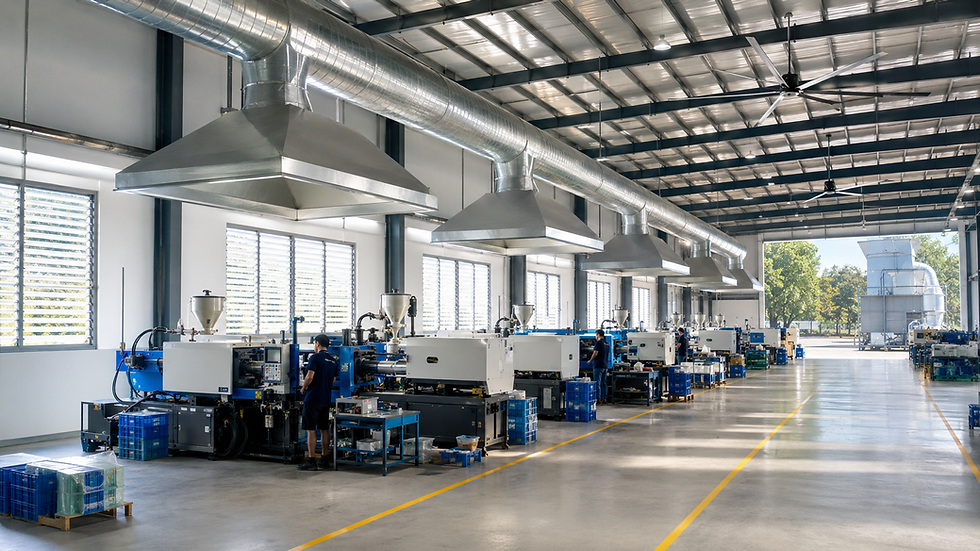
Injection molding machines, hydraulic systems and heated molds continuously release heat into the workshop. Process odors may also spread between production lines when local extraction and fresh-air supply are insufficient. The POPULA Injection Molding Workshop Ventilation Solution combines concentrated exhaust, balanced makeup air and large-area circulation to create a more controlled airflow path.

POPULA Injection Molding Workshop Ventilation Solution for Heat and Odor Control
Heat generated around the molding machines rises and accumulates above the production area. If the workshop relies only on doors, windows or general wall exhaust, hot air may remain around the machines while odors migrate toward other work zones. Excessive negative pressure can also reduce exhaust performance and draw uncontrolled air through entrances.
Why 9-19, SF(G), BF and DFS Fans Were Selected
The 9-19 high-pressure centrifugal fan provides the pressure required to overcome extraction ducts, fittings and filtration resistance. Selected models can exceed 8,000 Pa at suitable operating points, but the final model must be matched to the calculated airflow and total system resistance. The conveyed gas should be non-explosive, non-corrosive and free from adhesive materials, with dust concentration below 150 mg/m³ and temperature not exceeding 80°C. SF(G) duct axial fans or BF cabinet fans can provide low-level makeup air, while DFS permanent-magnet industrial ceiling fans support wide-area circulation with relatively low installed power.
POPULA Fan Layout for Workshop Ventilation Support
High-level extraction openings or collection hoods are positioned above the machine rows and connected to a main duct. Where filtration or other emission treatment is required, the 9-19 fan is installed downstream of that equipment. SF(G) or BF supply units introduce outdoor air from the opposite, lower side of the workshop to balance pressure. DFS ceiling fans move air across stagnant zones and reduce thermal stratification. Supply and exhaust points should remain separated to prevent fresh air from being discharged before reaching the occupied area.
Practical Value for Injection Molding Workshop Ventilation
This layout supports more effective heat removal, limits the uncontrolled spread of process odors and helps maintain a stable airflow direction across the workshop. Filters, ducts, dampers and fan operating conditions should be inspected regularly. Where plastic processing emissions require dedicated purification, the treatment equipment must be selected according to the actual material and local regulations; ventilation fans alone do not replace emission control. POPULA industrial ventilation solutions can be configured according to workshop size, machine layout and calculated system resistance.


Comments